
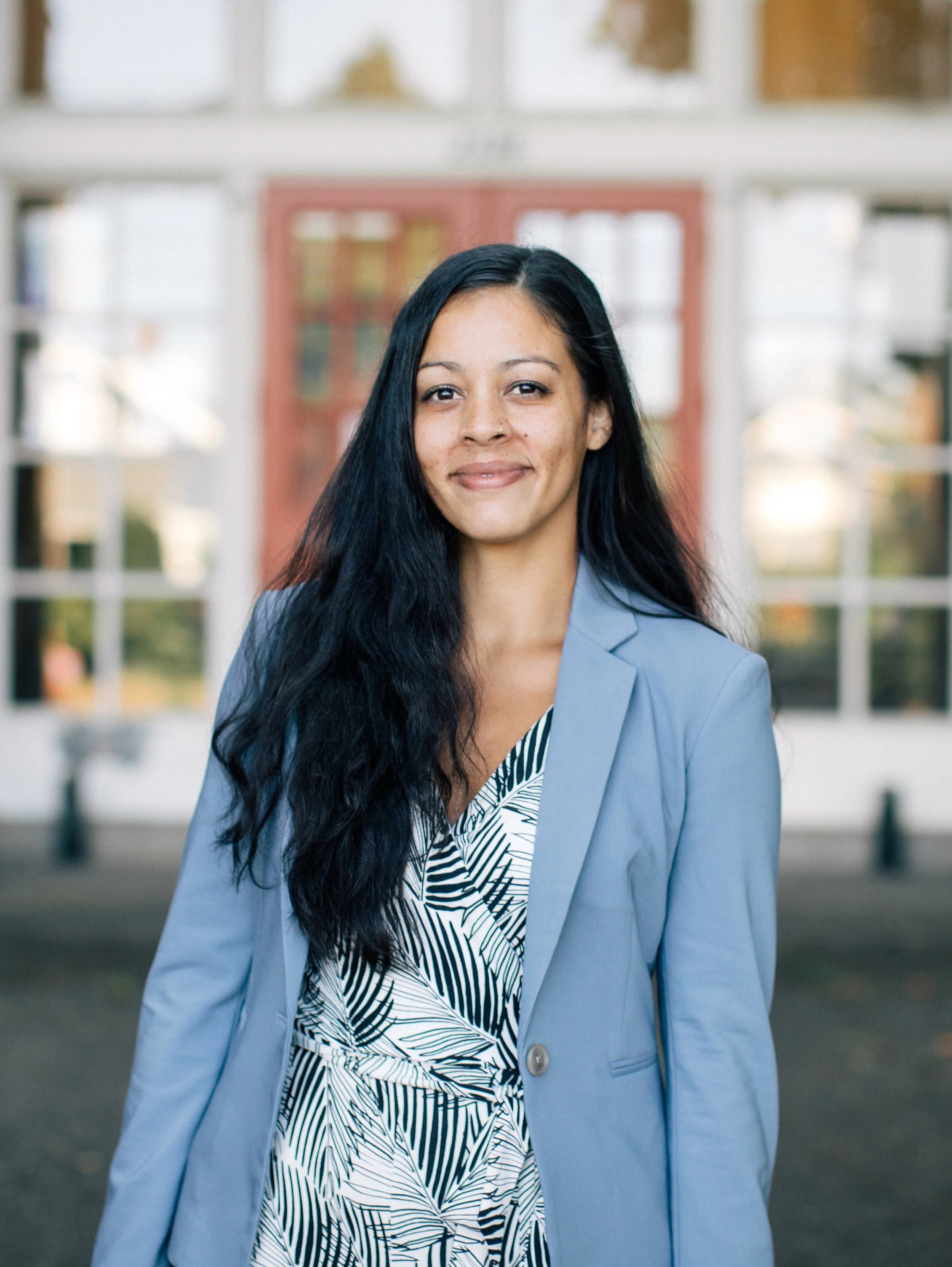
is a licensed clinician, leadership strategist, and equity consultant with over 15 years designing trauma-informed, race-explicit workshops, curriculum, and leadership initiatives for nonprofits, schools, and community organizations.
Her approach to change work integrates liberation psychology, neurobiology, and structural analysis to strengthen leadership resilience, organizational culture, and sustainable power-building ecosystems.
Vanessa Washington
Why Village Resiliency
As both a mental health practitioner and organizational strategist, Vanessa has consistently encountered the same barrier: the lack of accessible, reliable education around healthy development, neurobiology, and trauma-informed care.
Village Resiliency was established to stand in that gap—to personalize and demystify the brain, human development, and the unique needs we all have, making trauma-informed practice accessible, understandable, and practical for leaders, educators, and community builders.
Impact & Approach
Vanessa’s work centers:
Accountability & Repair
Power & Positionality
Collective Resilience
Political Education in Leadership Practice
She supports leaders to align internal sustainability with external commitments to racial justice and collective liberation.
Her approach bridges nervous system regulation, systems analysis, and movement-aligned leadership practice, ensuring leaders and teams are resourced internally while advancing equity externally.
Education & Training
Vanessa holds a Bachelor’s Degree in Psychology & Spanish, a Master's Degree in Clinical Counseling, with post-graduate studies in cross-cultural effectiveness, facilitating Critical Conversations around Race, and Coaching for Equity.
Expertise
Supporting leaders to navigate power, positionality, and conflict
Strengthening collective resilience within systems impacted by trauma
Integrating political education about how institutions, policies, and funding structures shape community wellbeing
Building cultures of accountability and repair
Workforce sustainability and strengthening long-term community capacity